

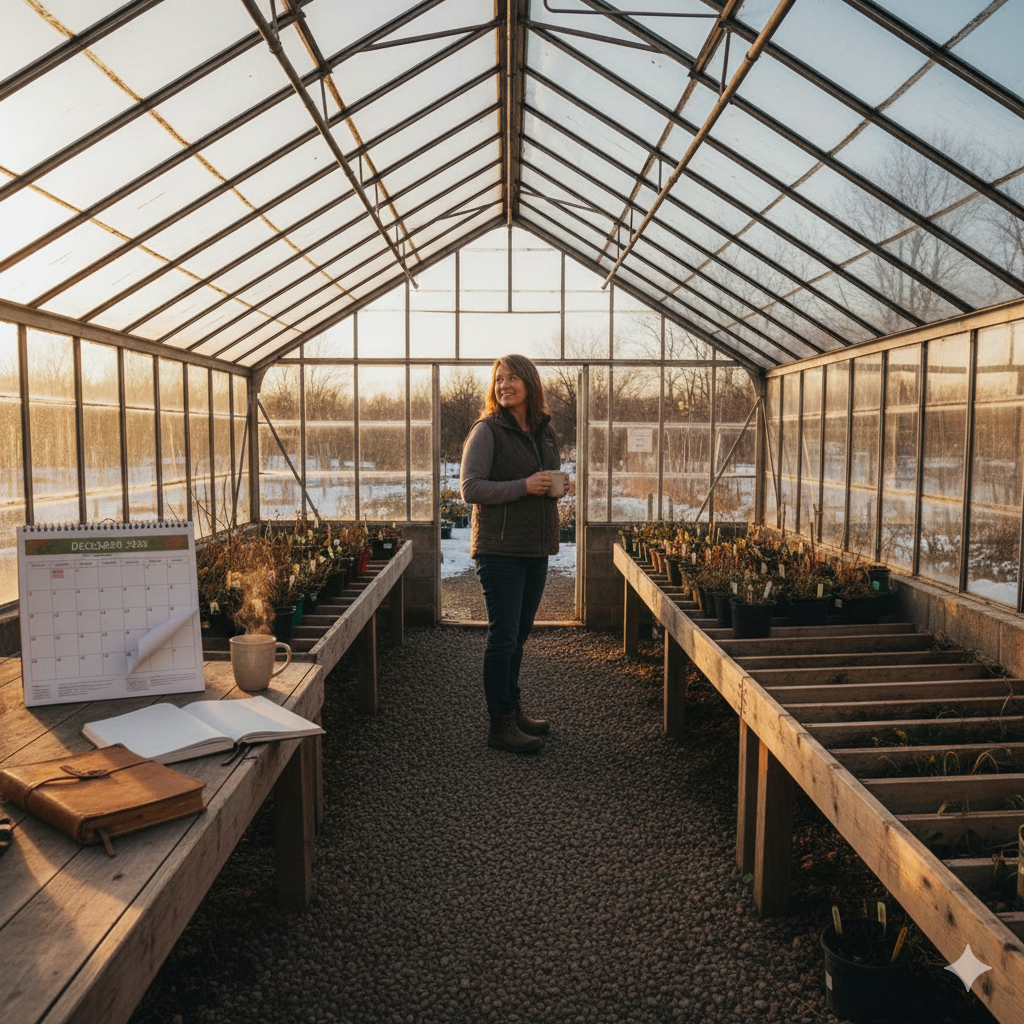
As 2025 comes to a close, it’s worth stepping back to look at what this past year revealed about AI, marketing, and the realities facing independent garden centers.
Much of the conversation around AI has been abstract, speculative, or overly hyped. What became clearer this year is something far more grounded: when applied thoughtfully, AI can help independent businesses save time, reduce friction, and make better decisions — without replacing the human experience that defines them.
For garden centers in particular, 2025 wasn’t about dramatic transformation. It was about learning where AI actually fits, where it doesn’t, and how it can quietly support owners, managers, and staff in very practical ways.
Below are five key lessons from the year — and why they matter as we look ahead to 2026.
1. Practical AI Beats Theoretical AI
One of the most important lessons of 2025 was that AI delivers the most value when it is treated as an assistant, not a strategy on its own.
In real-world use, tools like ChatGPT, Microsoft Copilot, Gemini, and Claude proved most helpful when applied to everyday tasks: drafting marketing content, organizing information, answering common questions, and documenting processes that often live only in people’s heads.
The takeaway is simple: AI works best when it supports human judgment rather than trying to replace it. Garden centers that approach AI as a time-saving tool — rather than a disruptive force — are far more likely to see meaningful benefits in 2026.
2. Better Decisions Start with Better Insight
Another clear lesson from 2025 was the growing importance of understanding why customers behave the way they do — not just what they buy.
AI-powered market research tools, such as Prxy AI, demonstrated how local insights can be surfaced more effectively than traditional, one-size-fits-all reports. By analyzing regional behavior and sentiment, these tools help garden centers align promotions, messaging, and product focus with what actually motivates customers in their specific market.
As we move into 2026, this shift toward insight-driven decision-making will only become more important. The goal isn’t more data — it’s clearer answers.
3. Knowledge Is an Asset — and AI Can Help Preserve It
Staff turnover, seasonal hiring, and generational transition are long-standing realities in the garden center industry. In 2025, it became increasingly clear that AI can play a meaningful role in preserving institutional knowledge.
Rather than relying solely on long-tenured staff to answer the same questions repeatedly, many garden centers began exploring AI assistants built from plant databases, FAQs, service information, and store-specific knowledge.
When done thoughtfully, these assistants don’t replace expertise — they help make it accessible. Looking ahead to 2026, AI-supported knowledge systems can reduce daily friction, improve customer experience, and ensure that hard-earned know-how isn’t lost over time.
4. Owned Communication Channels Matter More Than Ever
Another lesson reinforced in 2025 was the growing value of direct, owned communication with customers.
As social media platforms continue to change algorithms and limit organic reach, garden centers benefit from having channels they control — whether through email, websites, or mobile apps. AI-enhanced tools can make these channels easier to manage, more responsive, and more personalized without adding complexity.
In 2026, successful garden centers will increasingly treat their digital presence not as a collection of tactics, but as a cohesive system designed to support long-term relationships.
5. Technology Should Support Continuity, Not Disruption
Perhaps the most important insight from 2025 is that technology adoption works best when it supports continuity.
Many independent garden centers are navigating ownership transition, leadership changes, or long-term succession planning. AI, when introduced carefully, can help bridge experience gaps, document processes, and provide consistency during periods of change.
The opportunity in 2026 isn’t about adopting more technology for its own sake. It’s about using the right tools to reinforce stability, preserve culture, and help the next generation build on what already works.
Looking Ahead to 2026
The conversation around AI will continue to evolve, but the lessons of 2025 point in a clear direction. The most valuable uses of AI are practical, restrained, and human-centered.
For independent garden centers, success in 2026 will come from applying these tools with intention — using AI to save time, clarify decisions, and support people, not replace them.
That balance is where real progress happens.
